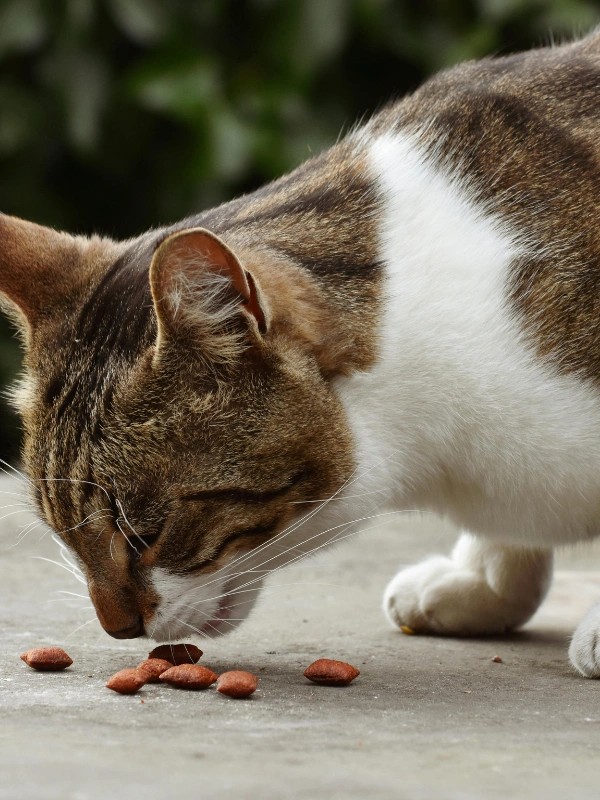
Cats may be picky eaters, but that doesn’t mean they can’t enjoy a few healthy treats alongside their regular meals.
While a complete and balanced cat food should make up the main part of your cat’s diet, small amounts of certain fresh foods can be offered as occasional treats. The key is choosing safe options and keeping portions small.
Here are some healthy foods many cats enjoy.
Cooked Chicken
Plain, cooked chicken can be a tasty source of animal protein for cats.
Offer it without seasoning, sauces, butter, or added salt. Remove all bones and serve it in small, bite-sized pieces.
Chicken should be an occasional treat rather than a replacement for your cat’s complete diet.
Cooked Turkey
Plain cooked turkey can also make a delicious occasional treat.
Choose lean, fully cooked meat and remove the skin and bones. Avoid turkey prepared with garlic, onions, heavy seasoning, or sauces.
A tiny piece can be a great reward for a curious kitty.
Cooked Fish
Some cats absolutely love fish.
Plain, fully cooked fish can be offered occasionally, but it should not replace a nutritionally complete cat food. Always remove bones carefully and avoid fish prepared with salt, spices, oils, or sauces.
If your cat has a sensitive stomach, introduce any new food gradually and watch for digestive changes.
Pumpkin
Plain cooked pumpkin can be offered in small amounts.
Some cats enjoy its texture, and pumpkin is also a source of fiber. Choose plain pumpkin without added sugar, spices, or other ingredients.
A small spoonful mixed with their regular food can be enough.
Carrots
Some cats may enjoy small pieces of cooked carrot.
Cook the carrot until soft and serve it plain. Cut it into very small pieces to make it easier for your cat to eat.
Not every cat will be interested—and that’s perfectly normal!
Green Beans
Plain cooked green beans can be another occasional treat.
They are low in calories and can provide some fiber. Make sure they are soft, unseasoned, and cut into small pieces.
Blueberries
A few blueberries can be offered as an occasional treat if your cat enjoys them.
Wash them well and consider cutting them into smaller pieces for easier eating.
Since cats are obligate carnivores, fruit isn’t a necessary part of their diet, so treats like blueberries should remain occasional.
Eggs
Plain, fully cooked egg can provide protein and may be enjoyed by some cats.
If you offer egg, keep the portion small and avoid adding salt, butter, oil, or seasoning. Never give your cat raw egg.
Foods to Avoid
Not everything that’s healthy for humans is safe for cats.
Never intentionally feed your cat foods such as:
- Chocolate
- Onions and garlic
- Grapes and raisins
- Alcohol
- Caffeinated drinks
- Xylitol-containing foods
- Raw yeast dough
- Cooked bones
- Highly salty or heavily seasoned foods
If you think your cat has eaten something potentially toxic, contact a veterinarian or animal poison service as soon as possible.
Keep Treats Small
Even healthy foods can become unhealthy if your cat eats too much of them.
Treats and extras should make up only a small portion of your cat’s overall diet. Too many treats can contribute to weight gain and may make it harder for your cat to get all the nutrients they need from their regular food.
A good rule is to think of human foods as occasional treats—not complete meals.
Introduce New Foods Slowly
Every cat is different.
When introducing something new, start with a very small amount and watch for signs of digestive upset, such as vomiting or diarrhea.
If your cat has a medical condition, food allergy, sensitive stomach, or special dietary requirements, ask your veterinarian before introducing new treats.
A Little Treat, A Lot of Love
Sharing a tiny healthy treat can be a lovely way to bond with your cat.
Just remember that the healthiest diet is one that meets your cat’s nutritional needs, fits their age and lifestyle, and is enjoyed in appropriate portions.
So go ahead and spoil your furry friend—with a little treat, plenty of affection, and lots of happy purrs. 🐾🤍
Because healthy habits can be delicious too!